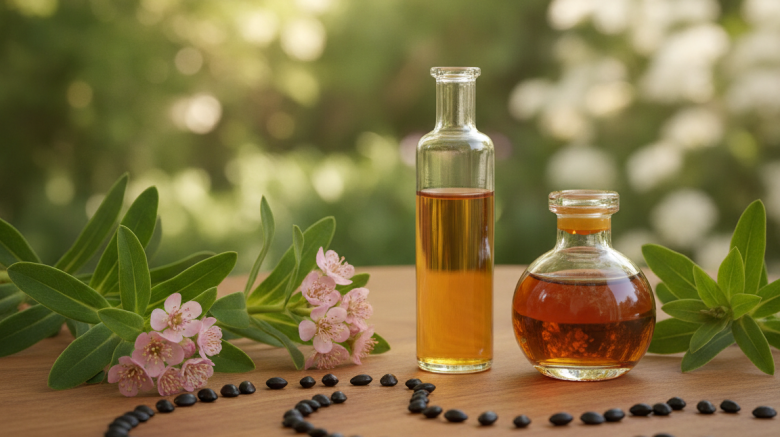
During last winter, a Mount Sinai nurse recounted how she had been using a rhodiola-and-griffonia blend. She was looking for help with extended shifts. She reported a gentle but consistent improvement: less anxiety and clearer focus during night rounds.
Her experience illustrates the appeal of botanical remedies for stress support and mood balance. The rhodiola-and-griffonia pairing have a long history in traditional botanical medicine. Modern brands include them in modern supplements, thanks to reliable manufacturers such as MIGU. MIGU develops botanical extract ingredients and fungal extract powders under strict cGMP and ISO standards.
Shiitake Mushroom Mycelia Extract
Shiitake Mushroom Mycelia Extract
Ganoderma Lucidum Spore Oil
The following guide explains rhodiola and griffonia extracts. The article discusses their role in stress relief and mood enhancement. The guide also offers straightforward recommendations on identifying reliable extracts.
Understanding Rhodiola Rosea And Griffonia Seed Extract: Origins And Active Compounds
Rhodiola rosea and Griffonia simplicifolia both carry deep roots in traditional remedies. Rhodiola rosea naturally flourishes in cold climates, valued in Siberia and Scandinavia for energy, resilience, and fatigue support. The seeds of the West African climbing shrub Griffonia simplicifolia were used in local remedies for emotional balance and rest.
Plant Background And Traditional Applications
This herb is a resilient mountain plant that grows on high plateaus. Traditional practitioners used its roots to boost stamina during physically demanding periods and cold seasons. Griffonia simplicifolia’s pods were collected for their seeds, used as calming tonics and sleep supports. Both plants are noted in traditional plant-use records for stress resilience and daily vitality, helping shape modern natural supplement formulas.
Rosavin, Salidroside, And 5-HTP As Key Actives
Rhodiola’s effects are mainly due to its rosavin and salidroside content, compounds often measured to standardize the extract. Rosavin is unique to true Rhodiola rosea, while salidroside is found across Rhodiola species and has been linked with nerve-supportive effects. Griffonia seeds, on the other hand, provide the serotonin precursor 5-HTP, a compound involved in serotonin production, making griffonia seed extract a central botanical in supporting serotonin production and mood pathways.
Extract Production And Quality Standards
Quality botanical extracts start from traceable cultivation or confirmed wild harvesting. Good extraction methods preserve and concentrate key actives such as rosavin, salidroside, and 5-HTP without reducing their potency. Clear standardization helps ensure consistent potency in botanical products by listing percent rosavin and salidroside for rhodiola or 5-HTP for griffonia.
Analytical testing confirms the composition and purity of the extracts. Methods such as HPLC and GC-MS quantify rosavin and salidroside, while LC-MS-MS can verify 5-HTP. cGMP, ISO, and organic certifications provide additional confidence. Manufacturers that combine cultivation, processing, and laboratory checks ensure reliability in rhodiola and griffonia botanical extracts.
| Category | Rhodiola Rosea | Griffonia Seed |
|---|---|---|
| Primary region | Siberia, Scandinavia, mountainous Europe | West Africa |
| Main actives | rosavin, salidroside | 5-HTP as the main marker |
| Traditional use | Fatigue, endurance, stress resilience | Rest, calm, and mood support |
| Quality markers | Rosavin and salidroside percentages | 5-HTP percentage |
| Testing methods | HPLC, UPLC, HPTLC, and IR | Chromatography and mass spectrometry methods |
| Supplement role | Stress-response support and resilience | Serotonin production support and mood balance |
Rhodiola Rosea & Griffonia Seed Extract Benefits
A combination of rhodiola rosea & griffonia seed extract is designed to address stress relief and mood enhancement through two supportive biological routes. Rhodiola works as an adaptogen to help the body manage stress. Griffonia seed extract provides 5-HTP, a building block for serotonin production.
Synergistic Effects On Stress Relief And Mood Enhancement
Rhodiola is used to support resilience to routine stressors by helping balance the stress response. Griffonia provides serotonin precursors to lift mood. In combination, they can support a calmer stress response and support stable emotional states.
Mechanisms: Stress-Axis Modulation And Serotonin Support
Compounds in rhodiola, especially rosavin and salidroside, are associated with the hypothalamic-pituitary-adrenal axis to support a more balanced cortisol response. Griffonia contributes 5-HTP that serves as a precursor for brain serotonin, supporting neurotransmitter balance tied to calm, sleep, and mood.
Research Summary For Anxiety Reduction And Mental Well-Being
Studies of rhodiola have reported less fatigue and stronger cognitive performance under stress. Research involving Griffonia and 5-HTP suggests benefits for rest, mood, and calm through serotonin-related mechanisms. Combined formulations appear in wellness supplement practice for stress-related anxiety support and mental well-being, with outcomes influenced by extract quality and dosing.
How Combined Products Are Commonly Formulated
Common study-based rhodiola ranges are 100 to 600 mg per day with standardized rosavin/salidroside. Griffonia-sourced 5-HTP frequently appears at roughly 50–200 mg per day depending on individual needs. Reliable brands disclose potency markers and practical dose directions on labels to ensure reliable results.
Stress Relief, Cognitive Health, And Mood Benefits Supported By Research
Research on rhodiola rosea extract and griffonia seed extract reveals their paired benefits on stress support and emotional balance. Rhodiola appears to influence the HPA axis, supporting stress adaptation and adrenal balance. Griffonia seed extract provides 5-hydroxytryptophan, a precursor to serotonin, aiding in emotional balance and calm.
Stress-support research often uses standardized rhodiola preparations with defined rosavin and salidroside content. The findings often show reduced fatigue and improved resilience in individuals facing chronic stress. Studies of griffonia-derived 5-HTP associate 5-HTP to sleep quality and mood support, supporting overall mental well-being.
For cognitive health, several trials demonstrate rhodiola’s role in improving mental focus and performance under pressure. Reported benefits may include quicker task completion, better concentration, and less perceived mental tiredness. Pairing rhodiola’s stress-response support with griffonia’s serotonin pathway support can support mental performance during stressful workloads.
Mood support via serotonin pathways remains a key benefit griffonia seed extract. When paired with rhodiola, users may experience greater emotional balance and reduced tension. Products should be formulated responsibly to avoid unwanted serotonin elevation, which is especially important for individuals on antidepressant medications.
Comparing these extracts with other natural supplements helps with making better product decisions. Ashwagandha provides adaptogenic stress support similar to rhodiola. L-theanine is often used for relaxed alertness without sedation. St. John’s wort is used for mild depression but has significant interaction concerns. B vitamins act as cofactors for brain chemical production and support mental well-being when deficiencies exist.
When choosing supplements, prioritize third-party tested extracts with declared active-compound percentages. Choose balanced formulas targeting both stress response and serotonin-related balance. That strategy improves the likelihood of calm mood, cognitive function, and lasting mental wellness.
Safety Guidance, Interactions, And Use Recommendations
Prior to taking either extract, review important guidance about safety and contraindications. Both herbal supplements are common in botanical wellness formulas, but each has different caution points. Select well-tested standardized products to reduce contamination risks and ensure consistent active compound levels.
Possible Side Effects And Who Should Avoid Them
Rhodiola is usually well tolerated. A small number of users may notice nervousness, difficulty sleeping when used late in the day, and dry mouth. Griffonia seed extract, because it provides 5-HTP, may cause nausea, loose stools, or stomach discomfort.
Poor-quality or contaminated 5-HTP products have been associated with rare but serious adverse issues. People with uncontrolled hypertension, bipolar-spectrum concerns, or plant-specific allergy should not use these extracts without medical supervision.
Drug Interactions With Serotonergic Medications
Taking griffonia-derived 5-HTP with SSRIs, SNRIs, MAOIs, triptans, or other serotonergic drugs raises the risk of serotonin syndrome. Always consult a prescribing clinician before pairing Griffonia-derived 5-HTP with antidepressants, migraine medicines, or serotonergic drugs.
Rhodiola might affect the effects of stimulants or drugs that affect the nervous system. Review any combination with a qualified medical professional to avoid unsafe combinations.
Guidance On Dosing, Timing, And Product Selection
Begin with a low effective amount and track changes in sleep, mood, and digestion. Rhodiola is often used in ranges of 100 to 600 mg per day. 5-HTP is often used at 50 to 200 mg per day, depending on personal goals.
Use rhodiola earlier in the day if it causes stimulation. Use griffonia with food to reduce gastrointestinal symptoms. Look for supplements that show rosavin and salidroside percentages for Rhodiola and 5-HTP content for Griffonia.
Select manufacturers with cGMP, ISO, HACCP, or Organic certification and validated testing methods such as HPLC or GC-MS. These checks improve confidence in predictable active levels and cleaner products.
Special Populations: Pregnancy, Breastfeeding, And Children
Safety data remain limited for pregnant or breastfeeding people. These extracts are generally avoided during nursing or pregnancy. Pediatric use of these extracts under qualified pediatric oversight.
Discuss any use in these special populations with a qualified healthcare provider before beginning supplementation. Tailored dosing guidance is essential for protecting sensitive populations.
| Safety Topic | Practical Guidance | Reason It Matters |
|---|---|---|
| product safety | Select certified manufacturers with standardized extract testing | Reduces contamination risk and ensures reliable active compound levels |
| medication interactions | Do not combine 5-HTP with SSRIs/SNRIs/MAOIs/triptans without medical advice | Protects against excess serotonin activity and related reactions |
| serotonin production | Track symptoms carefully when using 5-HTP around serotonin-affecting products | May catch unwanted effects before they worsen |
| dose guidance | Begin low and increase gradually. Rhodiola 100–600 mg/day; 5-HTP 50–200 mg/day | Minimizes side effects while finding an effective dose |
| special populations | Do not use during pregnancy or breastfeeding without clinician guidance | Safety information is limited for these groups |
| who should avoid use | Do not use without guidance if bipolar disorder, uncontrolled hypertension, or allergy is present | Prevents worsening of underlying conditions |
| botanical supplements | Select products with transparent labels and independent testing | Improves overall product reliability and consumer trust |
How To Choose High-Quality Extracts From Trusted Manufacturers
When buying Rhodiola Rosea & Griffonia Seed Extract or related botanicals, selecting a trusted manufacturer is critical. Check for clear standardization on product labels, including percentages of active ingredients like rosavin, salidroside, and 5-HTP. You should also check the presence of certificates and third-party COAs that confirm the product’s strength, cleanliness, and consistency, ensuring it is free from excess heavy metals, pesticide residues, and microbial contamination.
What labels should show
Examine product labels for declared marker-compound levels and compliance with quality references such as EP, USP, JP, or CP. Reliable labels should detail processing information, batch IDs, use-by dates, and testing links. Credentials such as cGMP, ISO, HACCP, Kosher, Halal, and Organic further support consistent quality.
MIGU supplier profile
MIGU offers plant extracts and fungal extract powders to the nutraceutical and pharmaceutical industries. Holding various certifications, MIGU emphasizes research and development along with advanced testing to ensure the quality of its botanical extract lines.
Production strengths and traceability
MIGU manages raw material quality using organic planted bases in Shanxi and Jiangsu. The company’s laboratory applies advanced analytical tools like HPLC, UPLC, GC-MS, ICP-MS, ELISA, HPTLC, and microbiology. This system supports consistent active percent and purity in each batch.
Related product categories to consider
- Shiitake mushroom mycelia extract for polysaccharides and immune-support formulas.
- Ganoderma lucidum spore oil softgel and ganoderma lucidum spore powder for concentrated triterpenes.
- Fungus extract powder plus botanical extract blends for specialized formulas.
- Rhodiola rosea & griffonia seed extract combos for stress and mood support.
MIGU factory capabilities and profile
| Attribute | Details |
|---|---|
| Facilities | Three factories totaling 10,000 ㎡, independent water purification, and four GMP extraction workshops |
| Staff & IP | More than 200 employees and 62 patents for ingredient development |
| Available extract range | 500+ herb extracts, including mushroom extracts and rhodiola rosea & griffonia seed extract formulations |
| Quality & Testing | Broad lab testing including HPLC, GC/LC-MS-MS, ICP-MS, HPTLC, plus around-the-clock service |
| Certifications | cGMP, ISO, HACCP, Kosher, Halal, Organic, with third-party COAs available |
When sourcing extracts, demand transparent product labels and certificates. Work with suppliers that provide traceable planted bases and robust R&D. That sourcing method supports the botanical extract, fungus extract powder, or specialty items like ganoderma spore oil softgel meet consumer safety and formulation-performance requirements.
Conclusion
Combining rhodiola rosea & griffonia seed extract offers a unique approach to herbal wellness formulas. It is commonly used for stress support, mood balance, and cognitive performance. Rhodiola’s rosavin/salidroside markers are linked with the stress-axis response. Griffonia’s 5-HTP feeds serotonin pathways. This pairing can reduce fatigue and sharpen focus, without the reliance on pharmaceutical approaches.
Responsible use matters: some may experience mild stimulation or stomach discomfort. 5-HTP has important medication-interaction concerns. Choosing products from certified manufacturers is essential. Quality manufacturers support transparent potency and verified purity, reducing risks and ensuring potency.
MIGU stands out as a supplier, with large-scale production, analytical labs, and certified organic planted bases in Shanxi and Jiangsu. Their GMP workshops, patents, and extensive extract catalog support dependable supply. For brands or buyers looking for tested natural supplements, MIGU offers manufacturing expertise and quality support. They meet standards in pharmaceutical, nutraceutical, and cosmetic industries.
Related: Rhodiola Rosea Extract: Personal Stories of Overcoming Burnout