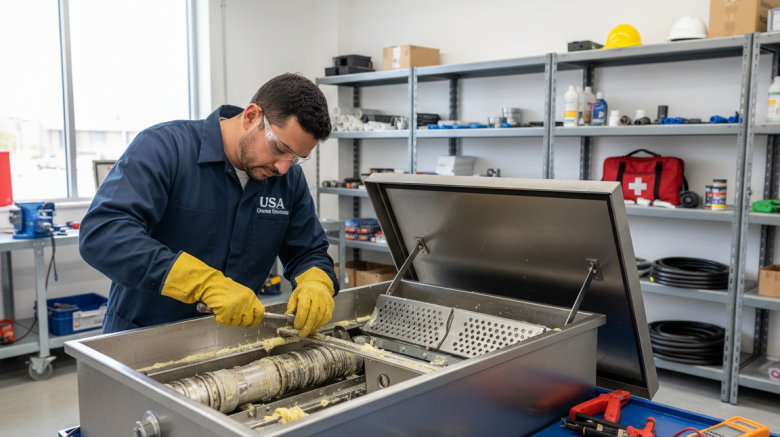
What if that necessary maintenance task for your commercial kitchen was in fact a hidden opportunity for greater business success?
That was the perspective I gained when I was dealing with the necessity to replace the unit. This key piece of equipment has changed dramatically from its Victorian-era origins. Today’s technology delivers systems far superior to outdated systems.
Click Here For Grease Trap Pumping

Go To Website Of Grease Trap Cleaning

Read More About Grease Trap Pumping
For me, moving to a newer system was never merely a cost. It was a smart business move to cut long-term costs and avoid future plumbing problems. I realized this upgrade would impact day-to-day operations for the next decade.
That’s why I left this vital service fully to the experts at Grease Cleaning Pros. Their crew’s strong understanding of the technical and hands-on sides of the process provided me full confidence.
This article serves as the comprehensive guide I would have wanted.
It will walk you through every factor to review for a trouble-free, informed Grease Trap Replacement that supports your entire operation.
Overview Of Grease Trap Replacement In Commercial Kitchens
The behind-the-scenes plumbing systems and lines in any commercial kitchen play a vital role in daily operations and long-term reliability. Knowing these components enables operators make informed decisions regarding maintenance and upgrades.
Why Grease Traps Are Essential For Your Kitchen
These specialized plumbing components intercept FOG (fats, oils, and grease) before they flow into municipal sewer lines. Without proper interception, severe clogs can disrupt the entire kitchen workflow.
The baffle setup inside these traps reduces water flow rate , so separation to happen naturally. Cleaner water flows down the drain while grease and solids are held back. This process helps prevent blockages in drain lines and avoids potential sewer overflows.
How Grease Trap Replacement Enhances Operational Efficiency
Replacing outdated equipment through qualified service strengthens wastewater management significantly. Modern technology lowers how often of plumbing issues that may halt kitchen output.
Correctly designed systems also support maintain compliance with health and environmental rules. This protection reduces citations and potential operational shutdowns that may impact continuity.
| Common Problems Without Proper Systems | Benefits With Modern Equipment | Impact on Kitchen Operations |
|---|---|---|
| Recurring drain clogs | Reliable wastewater flow | Lower downtime |
| Sewer line backups | Overflow prevention | Continuous production |
| Compliance violations | Ongoing compliance | Operational protection |
| Costly plumbing repairs | Long-term savings | Budget stability |
Key Factors To Consider In Grease Trap Replacement
Choosing the right equipment for my kitchen plumbing involved more than just comparing price tags. I needed to see the complete financial picture that would shape operations for years.
This comprehensive approach reduced costs and prevented unexpected shutdowns.
Total Cost Of Ownership Beyond The Purchase Price
The upfront price represents only a portion of the total investment. I learned quickly to account for ongoing expenses such as routine pump-out fees and maintenance expenses. These recurring charges can significantly hit annual budgeting.
Certain units might need replacing in half the time of more durable options. That earlier replacement can cancel out any early savings. Investing in durable equipment tends to be cheaper over time.
Automatic systems can reduce how often servicing is needed, saving time and money. Larger-capacity models may require less frequent emptying. These operational gains add to long-term value.
Maintenance, Cleaning, And Availability Of Replacement Parts
Different trap designs have different maintenance requirements. Some operations have staff to handle cleaning internally. Others prefer professional servicing for consistent results.
Parts availability became a key consideration for my decision. Waiting for weeks for a critical component during peak periods can disrupt operations. I verified that key parts were easy to source.
Routine maintenance schedules let you plan expenses and prevent surprises. Learning expected replacement intervals allows for smarter budgeting. This proactive approach helps protect the business from unexpected downtime.
Assessing Durability And Code Compliance
The material makeup of my new unit became a critical factor in my decision-making process. I needed equipment that could handle daily kitchen load while complying with all legal requirements.
Evaluating Materials And Long-Term Reliability
Traditional concrete units corrode quickly under constant exposure to kitchen waste. They often can’t handle the harsh environment long-term.
Legacy metal designs often last roughly 7 years before deterioration begins. This short lifespan leads to regular system swaps.
Modern options use stainless steel and corrosion-resistant polyethylene. Examples like Big Dipper and Trapzilla have a proven track record that exceed two decades.
Newer plastic-based models fight both corrosion and rust effectively. That durability justifies the upfront investment through extended lifespan.
Compliance matters just as much for operations. The system has to meet all local, state, and federal regulations immediately after installation.
Grease Cleaning Pros helped me through requirements set by health departments, building inspectors, and sewer authorities. They made sure the selected unit met all plumbing and building standards.
Grease Trap Replacement Options And Best Practices
Facing a unit that isn’t working takes a careful evaluation of repair versus replacement. That decision affects kitchen performance and budget substantially. I consider several factors before choosing the right path.
Comparing Repair Versus Replacement Remedies
Slight leaks around seals tend to signal routine wear. These issues can often be repaired with professional repair service. Repairing first keeps costs down if the equipment is still fairly new.
Still, persistent clogs and serious structural damage point to underlying issues. A worn unit with corrosion can require a full replacement. A replacement becomes the only practical option in those situations.
I weigh short-term repair expenses against long-term efficiency. Ongoing failures add hidden costs through downtime. A new installation often turns out more affordable in the long run.
Selecting A Reliable Service Provider
I choose Grease Cleaning Pros because of their detailed assessment process. They help me see whether repairing or replacing better serves my operation. Their know-how prevents small issues from becoming major operational disruptions.
Professional installation work helps ensure the right sizing and code compliance. This attention to detail helps protect operations from future plumbing issues. Partnering with experts builds confidence in equipment performance.
Sizing And Installation Considerations For Commercial Kitchens
Calculating the correct specifications for my foodservice facility’s drainage system took careful calculation. Getting this right influences both compliance and efficiency substantially.
Collaborating with Grease Cleaning Pros helped me pinpoint the right capacity my operation needs. They consider sink dimensions, equipment output, and daily meal count.
Understanding Capacity Needs And Space Constraints
What you serve dramatically affect the makeup of wastewater. A fryer-heavy kitchen generates heavier loads than a kitchen preparing salads.
Many urban sites often don’t have space for traditional large units. Grease Cleaning Pros walked me through compact options that fit basement or multi-floor builds.
Their professional sizing tools determine exact requirements without oversizing. This method cuts costs while maintaining compliance.
Accurate sizing prevents recurring clogs and high-cost emergency calls. It also helps maintain a smooth workflow during the busiest hours.
Maintaining Your Grease Trap For Long-Term Performance
Good care of the drainage system extends service life while protecting operations from costly plumbing emergencies. I rely on Grease Cleaning Pros to set up a routine that keeps systems running smoothly.
Their guidance helps me avoid big issues that can shut down kitchen operations. Consistent attention prevents little issues from becoming big headaches.
Effective Cleaning And Routine Maintenance Tips
I arrange professional servicing every one-to-three months according to kitchen volume. This regular cleaning clears trapped debris before it causes blockages.
Between professional visits, I use strainers to stop food particles. My team understands to place waste in designated bins rather than sending it down the drain.
Recognizing Early Signs Of Grease Trap Failure
I look for warning signs like unusual odors or sluggish drainage. These often point to emerging issues that require quick attention.
Clogged lines and needing pump-outs often signal the system is under strain. I address these signs quickly to prevent a full failure.
Strategies For Preventing Plumbing And Sewer Issues
Scheduled inspections spot leaks and early corrosion early. This preventive approach keeps me away from emergency repairs and operational disruptions.
Proper waste disposal practices remain my first line of defense. Training employees correctly stops most drainage problems before they begin.
| Maintenance Practice | Frequency | Expected Outcome |
|---|---|---|
| Professional cleaning | Every 1–3 months | Helps prevent blockages and odors |
| Sink strainer use | Daily | Reduces solid waste entry |
| Staff training | Continuous | Correct waste disposal habits |
| Visual checks | Weekly | Early problem detection |
Conclusion
Investing in effective wastewater control has been essential for business success. Trusting Grease Cleaning Pros for my equipment needs gave professional guidance through every step.
This resource covered the essential factors for making well-informed decisions. From understanding why these systems are crucial to choosing the right type and the correct size, every detail is important.
Factoring in total costs of ownership beyond just the purchase price creates lasting value. Proper sizing and compliance help protect the operation from regulatory issues while successfully handling kitchen discharge.
Working with professional help helps ensure correct installation and maintenance. That partnership helps prevent significant plumbing problems that can interrupt commercial kitchen operations.
I urge other operators to use this comprehensive resource when dealing with system decisions. Following these practices protects your plumbing systems and supports smooth operations for years to come.
FAQ
How do I know when my commercial kitchen needs a new system instead of just a repair?
What factors influence the total price of installing a new unit in my food service establishment?
What are the benefits of choosing a high-quality, durable material for my new interceptor?
Can I handle the cleaning and upkeep myself, or should I hire a professional service?
How important is correct sizing for my new interceptor, and what happens if it’s wrong?
Related: Grease Trap Pumping in Santa Monica Cafeteria Style Operations High Volume Maintenance Tips