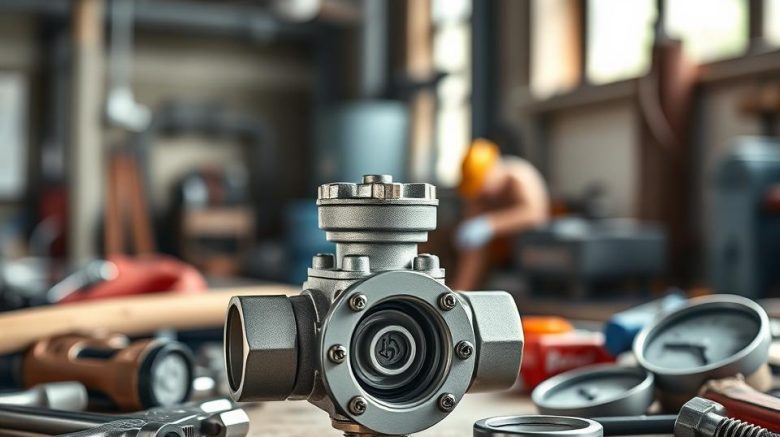
Watts SD 3 Backflow Preventer – Reliable Safety
Over 500,000 pump cycles have been logged in tests of the Watts SD 3 Backflow Preventer. This level of testing highlights that it provides strong protection for beverage dispensing systems.
This coffee maker backflow preventer device uses a compact design with two checks and an atmospheric vent to keep carbonated beverages or CO2 from contaminating drinking water lines. It is offered in 1/4″ to 3/8″ sizes, and the SD3-MN, SD3-FN, SD3-MF, and SD3-MF-LS models cover typical standard connections used in post-mix and coffee systems.
Made with 316 stainless steel and using FDA-approved rubber compounds, the sd3 ensures safety and quality. It meets ASSE 1022 and ANSI/NSF 18 standards, satisfying demanding food and beverage safety requirements. Designed to withstand up to 150 psi and temperatures of 130°F, it features a visible vent to signal when maintenance is needed.
When it comes to maintenance, the SD-3 has compatible repair kits and replacement parts readily available. Suppliers such as Installation Parts Supply stock these kits, allowing commercial foodservice operations to carry out routine upkeep with ease. By performing yearly checks on the strainer and the backflow system, operators help ensure safe, code-compliant service.

Reasons to choose the Watts SD 3 Backflow Preventer for beverage and coffee applications
For beverage lines that handle carbonated water and CO2, the Watts SD3 Backflow Preventer is an essential safeguard. This compact device prevents acidic fluids from contaminating the potable water supply. It thus ensures the safety of customers and the longevity of equipment. Additionally, its atmospheric vent acts as an immediate indicator for any discharge, enabling prompt response from staff.
This backflow preventer uses a dual check system that helps maintain steady supply pressure. Upon detecting a compromised second check or excessive downstream pressure, it vents the air. This response effectively blocks hazardous backflow of carbonated water or CO2 from entering kitchen and service piping.
How the SD3 protects against carbonated beverage contamination
Systems for carbonated beverages may inadvertently introduce acidic fluids into water lines. This situation may cause copper to leach from pipes, potentially resulting in nausea and vomiting when copper is ingested. To solve this problem, the SD3 Backflow Preventer uses a pair of check valves along with an atmospheric vent. This configuration greatly lowers the risk of contamination.
Where to use the SD3 in post-mix beverage gear and coffee makers
The SD3 is well suited for post-mix soda machines, carbonators, and beverage dispensing systems. Its design supports multiple installation points, which makes it suitable for setups needing a strainer either before or after the pump. Additionally, it provides essential backflow prevention for coffee makers and non-carbonated beverage lines.
Main benefits for commercial and foodservice operators
- Code compliance and safety: Complies with ASSE 1022 for beverage backflow devices.
- Compact plumbing fit: Sizes suit tight builds in foodservice and retail beverage stations.
- Durable materials: 316 stainless steel body with FDA-grade elastomers stands up to heavy use.
- Easy fault detection: Atmospheric vent offers a clear visual cue when the unit discharges.
- Supply and service: Wholesale distributors and parts suppliers keep sd3 watts inventory and repair kits on hand for quick replacement.
For coffee maker applications needing dependable backflow protection, the Watts Dual-Check and Series 7 valves offer solid solutions. The #7 Dual Check valve, alongside the SD3, accommodates a variety of service environments. These options offer flexibility in design and functionality to meet specific site requirements.
Technical features and specifications of the SD3 watts model
The sd 3 comes in sizes perfect for cramped spaces in beverage and coffee machines. You can pick 1/4″ or 3/8″ (8–10 mm) ports. Connection options include male NPT (SD3-MN), female NPT (SD3-FN), SAE male flare (SD3-MF), and a special flare-less strainer (SD3-MF-LS) suited for post-pump setups.
Strainer-equipped models feature a Female NPT inlet and a wye-pattern strainer. This arrangement is intended to protect pumps and prevent blockage in beverage lines.
The construction utilizes 316 stainless steel that resists corrosion for the body and adapters. Its strainer, made of NSF-approved acetal plastic, meets rigorous health standards. In addition, the elastomers comply with FDA food additive regulations so materials are safe for drinking water.
The sd 3 is engineered to handle commercial-duty demands. The unit handles pressure up to 150 psi (10 bar) and temperatures up to 130°F (54°C). Manufacturer flow charts demonstrate that it maintains efficiency across typical beverage flow ranges, aided by its size.
Durability testing indicates it can exceed 500,000 pump cycles. The design reduces cavitation and promotes smooth operation, making it ideal for espresso and beverage dispensers.
- Certifications: ASSE 1022 approved Dual Check with Atmospheric Vent.
- Holds ANSI/NSF Standard 18 certification for manual food and beverage dispensing gear.
- Lead-free wetted surface: under 0.25% lead by weight.
Using the RKSD3T repair kit (order code 0888556) streamlines repair service. The kit provides the required parts for 1/4″–3/8″ maintenance, with both check assemblies included.
Manufacturer blueprints illustrate standard piping setups for water and post-pump configurations. They indicate the recommended SD3 placement to maintain compliance with backflow prevention standards.
In broader applications, the sd-3 watts fits well as part of the watts series 7 lineup. It’s particularly effective when paired with the watts #7 dual check valve, offering extra protection or isolation in complex systems.
Guidance on installation, maintenance, and safety for optimal performance
Correct installation and routine maintenance are critical for reliable watts sd 3 backflow preventer operation in beverage and coffee systems. Following the manufacturer’s instructions and complying with local codes is key to protecting both equipment and users. Here, we outline essential installation, care, and safety practices.
Recommended installation practices
- Verify that the flow direction arrow on the valve body matches the actual flow. Install the sd3 watts horizontally or vertically as needed, permitting flow upward or downward.
- Flush the pipes before installation to remove any scale and debris. Doing so helps prevent fouling of the checks.
- Connect a vent discharge line to the SD3 vent outlet, leading it to an area that is both safe and well-ventilated. That way, any water or CO2 is directed away from the equipment and staff.
- Install the strainer and valve in locations where they are easy to reach. Avoid installing them inside walls or hidden spaces to reduce risk of damage from the watts dual check vent.
- In carbonated beverage systems, do not use copper tubing downstream so as to prevent copper leaching. Copper tubing downstream might be suitable for non-carbonated lines, like those in a coffee maker backflow preventer setup.
- Include an upstream strainer and pump if needed for post-pump installations. Be sure to follow Watts instructions and applicable local authority installation rules.
Maintenance and inspection recommendations
- Inspect the strainer and the backflow preventer annually to make sure they are functioning correctly.
- When check assemblies foul or fail, use the RKSD3T repair kit for replacement. For busy foodservice sites, it is wise to stock spare kits to minimize downtime.
- Check vent discharge piping routinely to prevent blockages so the atmospheric indication remains reliable.
- Follow manufacturer-specified service intervals and guidelines for part replacement. For precise dimensions or the latest information on watts sd3 components, contact Watts Technical Service.
Safety warnings and warranty notes
- Before use, thoroughly read and adhere to all installation and safety instructions provided. Ignoring these guidelines may result in personal injury or damage to the equipment.
- Watts offers a limited one-year warranty that covers defects in both materials and workmanship. Remedies may include replacement or reconditioning at the discretion of Watts.
- Warranty coverage does not extend to abuse, misuse, wrong application, poor installation, lack of maintenance, or modification.
- State law determines the extent to which the warranty covers incidental and consequential damages. It’s essential to check state laws for details on implied warranties and consumer rights.
- The product literature includes a notice according to California Proposition 65 about the presence of chemicals known to cause cancer or reproductive harm. To review specific details when choosing a coffee maker backflow preventer or other beverage protection solutions, refer to Watts documentation.
How the SD3 compares with related Watts products and additional keywords
The SD3 stands out within the Watts product line because it is designed specifically for carbonated beverage systems. The unit includes an atmospheric vent. This vent both provides clear signaling and safely discharges CO2 or contaminated fluid. This is a unique feature, absent in many general devices found in the Watts series 7, including the standard watts #7 dual check valve.
The sd-3 employs 316 stainless steel and elastomers compatible with beverages, adhering to NSF/ANSI 18 standards. These materials, combined with its robust testing for dispenser pump cycles, distinguish the sd3. Unlike other Watts dual check devices geared toward plumbing, it is specifically designed for foodservice use.
When system needs go beyond the sd-3’s capabilities, Watts offers alternatives in the series 7 family. These models serve different backflow protection roles. They may be preferred for particular size options, connection styles, or material selections that differ from the sd-3’s compact, vented design.
- Key differentiator: the SD3 features an atmospheric vent for immediate visual failure indication and safe relief.
- Material advantage: the sd3 watts construction includes beverage-grade 316 stainless and FDA-compliant elastomers.
- Alternate use: the watts #7 dual check valve and other watts series 7 models address larger plumbing demands.
For those in foodservice installation or vending, aligning product features with application needs is crucial. The sd-3 is optimal for beverage dispensers requiring vented protection and NSF certification. For general plumbing applications, the watts #7 dual check and additional Watts models are worth exploring.
Distributors such as Installation Parts Supply carry sd-3 units, RKSD3T repair kits, and key parts. They ensure the availability of various connection styles and strainer options. Such variation is important for systems needing specific fittings or customized maintenance setups.
Conclusion
The Watts SD3 offers precise protection for beverage and coffee machinery, boasting certification and a design focused on safety. Constructed from 316 stainless steel and fitted with FDA-approved internal parts, it effectively stops backflow of acidic, carbonated drinks into clean water lines. This protection is crucial for soda fountains, post-mix dispensers, and commercial coffee makers where water safety is mandatory.
To keep the SD3 Watts at peak performance, correct placement and ongoing maintenance are required. It should receive yearly inspections, correct vent routing, and attention to avoid copper in downstream carbonated beverage piping. By adhering to these practices, you help ensure performance and regulatory compliance. Additionally, the availability of repair kits and parts, such as RKSD3T, makes maintenance simpler, ensuring the unit’s longevity.
For those looking to purchase, Installation Parts Supply among others offer the SD-3 and its repair components for foodservice professionals. It’s important to consult Watts’ technical documents, ensure the model fits the system’s needs, and adhere to local installation standards. Doing so guarantees the backflow preventer’s effectiveness and reliability for coffee and beverage systems over time.